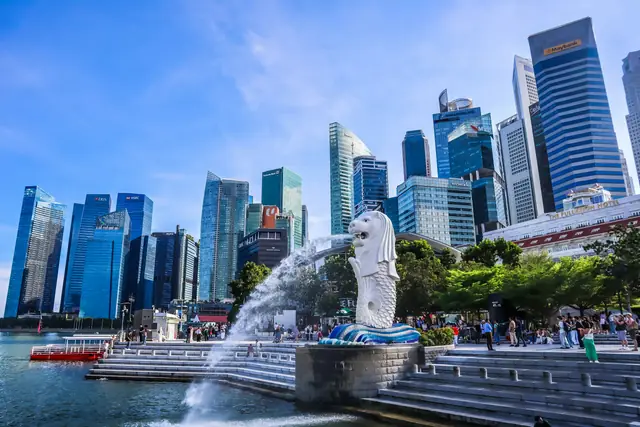
Singapore
A city and a country at once, so there is no second campus city to compare.

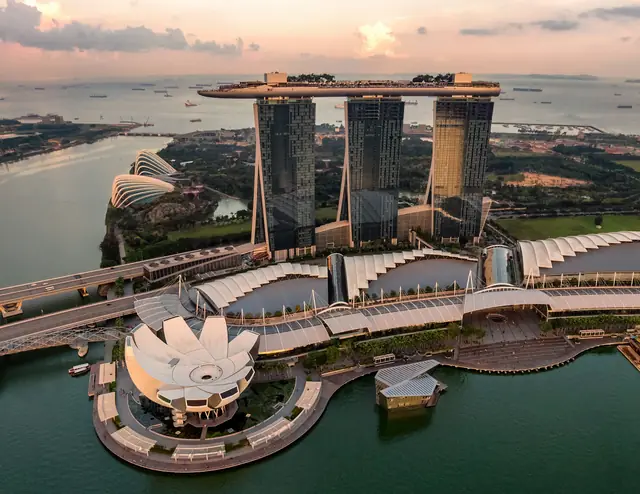
Singapore
Safe, well connected, and a hub for business and logistics.
Main intakes
January and August
Work while you study
16
hours a week
Stay after you graduate
No open work visa
Typical tuition
SGD 21,400 to SGD 40,600 a year
Graduates of an approved institution may apply for a one-year pass to look for work.
Many private institutions run more than two intakes, so you wait less to begin.
Several institutions here teach degrees awarded by universities abroad, usually for less.
Teaching, daily life and work are all in English, with Mandarin, Malay and Tamil alongside.
Singapore is a short flight from much of Asia, and it's very safe. It's a hub for business, finance and logistics. Some Australian and British universities run campuses there, alongside local institutions.
Where each level can take you. Lengths are typical, not fixed.
usually 1 to 3 years
A polytechnic or private diploma can lead into a degree, often with credit.
usually 3 to 4 years
A degree is the usual way into a master’s and into the job-seeking pass.
usually 1 to 2 years
One to two years, often taken part-time alongside work here.
usually 3 to 4 years
A doctorate is research work, usually at one of the public universities.
Study options
Diplomas to postgraduate
What you usually need at each level.
Institutions accept IELTS, PTE Academic or TOEFL iBT. The institution sets the score, not us, so check the course page or ask us.
Typical, not a quote.
Tuition — Bachelor's degree
SGD 21,400 to SGD 40,600 a year
The lower figure is with the MOE Tuition Grant, which carries a three-year work obligation. Most institutions on our list are private and set their own fees.
Nanyang Technological University: tuition fees Ministry of Education: Tuition Grant Scheme
Living costs
Ask us for the current figure.
Money you need to show for your visa
Ask us for the current figure.
Visa fee
SGD 60
A Multiple Journey Visa costs extra where it applies.
ICA: completion of formalities and issuance of Student's Pass
Ask us for the current figure.
ICA: completion of formalities and issuance of Student's Pass
Health cover
Ask us for the current figure.
Private institutions that offer degrees from overseas universities are often cheaper than the home campus. Living costs are high, so plan carefully.
Free student visa advice. We do not promise a visa, an offer or residence.
Many students work part-time. The rule is 16 hours a week while your course runs.
Only at institutions on the Ministry of Manpower’s list. Many private institutions are not on it, so check yours before you count on working.
Ministry of Manpower: work pass exemption for foreign students
In scheduled breaks you may work full-time.
Only at institutions on the Ministry of Manpower’s list. Many private institutions are not on it, so check yours before you count on working.
Ask us before you plan. We could not confirm the rule either way.
No open work visa
Long-Term Visit Pass
This is a pass to stay and look for a job, not a work pass. Once you find work, your employer applies for the work pass.
This is not a promise of work or residence. Some graduates later apply for a skilled or employer-sponsored visa.
Many private institutions start courses several times a year, often in January and August. Start dates are more flexible than in many other places.
Fill in one short form. It takes about five minutes, and it's free.
We check what you've studied, your English and your budget. Then we send you options that fit.
We send your course applications. Once you have an offer, we help prepare and send your student visa application.
We stay with you until you hear back. Then we help you get ready to go.
A city and a country at once, so there is no second campus city to compare.
Where you could study
21 in total, including Singapore University of Technology and Design, James Cook University Singapore and Curtin Singapore.
This list is a guide to what we can help you apply to, and it changes. Each institution sets its own entry requirements, fees and courses.
General information only. Visa decisions are made by the relevant immigration authority.
Questions
General information only. Visa decisions are made by the relevant immigration authority.
Free assessment
Three short steps, about five minutes, and it is free. We look at what you have studied, your English and your budget, then send you options that fit.
General information only. Visa decisions are made by the relevant immigration authority.
What we ask
Your name, how to reach you and where you are now.
What you've studied, what you want to do next, and where and when.
Roughly what you can spend and who's paying. A range is fine.
Keep looking
General information only. Visa decisions are made by the relevant immigration authority.