Amsterdam
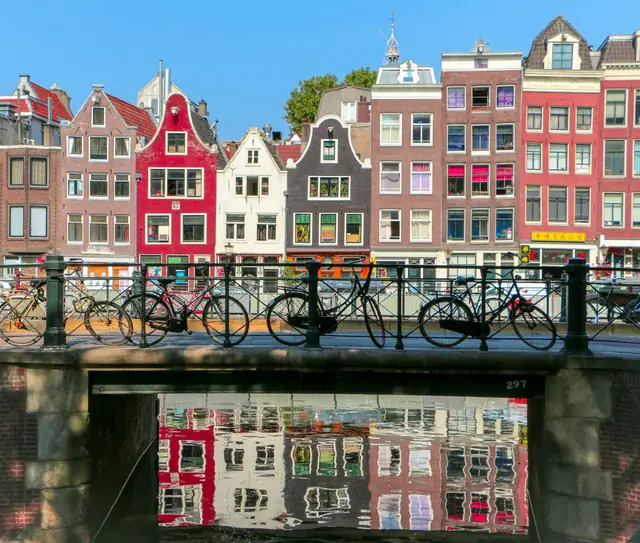
The best known and the most expensive, with a real shortage of student housing.

Netherlands
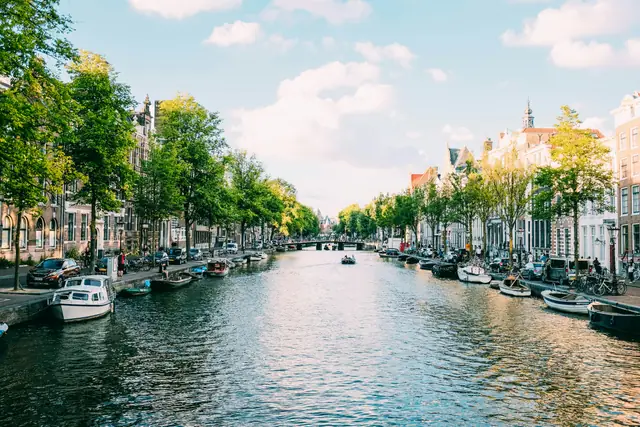
Lots of English-taught degrees, and practical universities of applied sciences.
Main intakes
September and February
Work while you study
16
hours a week
Stay after you graduate
12
months
Typical tuition
€9,000 to €20,000 a year
Official sources
The orientation year lets you work freely while you look, with no employer permit needed.
You can take a full degree in English without speaking Dutch first.
Fees for non-EU students are usually well below what the same subject costs in Britain.
Groningen or Twente will stretch the same budget a lot further than Amsterdam.
The Netherlands teaches many degrees fully in English. Its universities of applied sciences are practical and job-focused. Tuition is often lower than in the United Kingdom.
Where each level can take you. Lengths are typical, not fixed.
usually 3 to 4 years
Three years at a university, four at a university of applied sciences, which is more practical.
usually 1 to 2 years
One to two years, and the usual route into the orientation year.
usually 4 years
A doctorate here is often a paid position rather than a course.
Study options
Diplomas to postgraduate
What you usually need at each level.
Institutions accept IELTS, PTE Academic or TOEFL iBT. The institution sets the score, not us, so check the course page or ask us.
Typical, not a quote.
Tuition — Bachelor's degree
€9,000 to €20,000 a year
Some institutions also charge an application fee.
Tuition — Master's degree
€12,000 to €30,000 a year
Living costs
€1,000 to €1,500 a month
Housing is the biggest part of that, and the hardest thing to find.
Money you need to show for your visa
€1,130.77 a month
Visa fee
€254
This amount is set per calendar year and changes each January.
Health cover
Health cover rules vary. Ask us what your institution requires.
IND: residence permit for study IND: intra-EU mobility student
Tuition is generally lower than in the United Kingdom, but housing in Amsterdam is scarce and costly. Ask us about smaller cities.
Ask us for the current figure.
Free student visa advice. We do not promise a visa, an offer or residence.
Many students work part-time. The rule is 16 hours a week while your course runs.
Your employer needs a work permit for you, which not every employer will arrange.
In scheduled breaks you may work full-time.
Full-time work is allowed in June, July and August.
Ask us before you plan. We could not confirm the rule either way.
You may be eligible to stay and work for up to 12 months.
You must have finished an accredited Dutch degree within the last three years. It cannot be extended.
Orientation year permit for highly educated persons
This is not a promise of work or residence. Some graduates later apply for a skilled or employer-sponsored visa.
September is the main start, and some courses start in February. Ask us for current dates.
Fill in one short form. It takes about five minutes, and it's free.
We check what you've studied, your English and your budget. Then we send you options that fit.
We send your course applications. Once you have an offer, we help prepare and send your student visa application.
We stay with you until you hear back. Then we help you get ready to go.
The best known and the most expensive, with a real shortage of student housing.
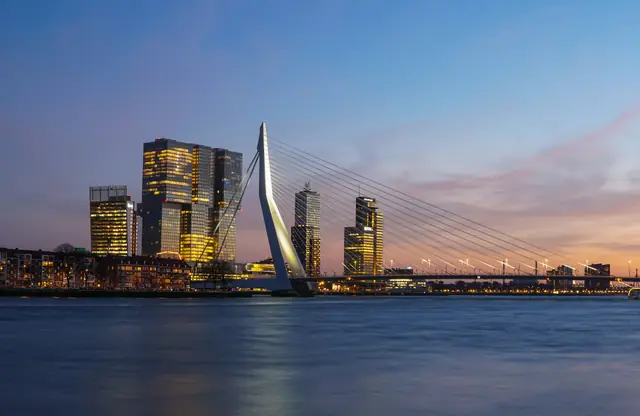
A modern port city half an hour from Amsterdam, and cheaper to live in.
Where you could study
10 in total, including University of Amsterdam, University of Groningen and Tilburg University.
This list is a guide to what we can help you apply to, and it changes. Each institution sets its own entry requirements, fees and courses.
General information only. Visa decisions are made by the relevant immigration authority.
Questions
General information only. Visa decisions are made by the relevant immigration authority.
Free assessment
Three short steps, about five minutes, and it is free. We look at what you have studied, your English and your budget, then send you options that fit.
General information only. Visa decisions are made by the relevant immigration authority.
What we ask
Your name, how to reach you and where you are now.
What you've studied, what you want to do next, and where and when.
Roughly what you can spend and who's paying. A range is fine.
Keep looking
General information only. Visa decisions are made by the relevant immigration authority.