
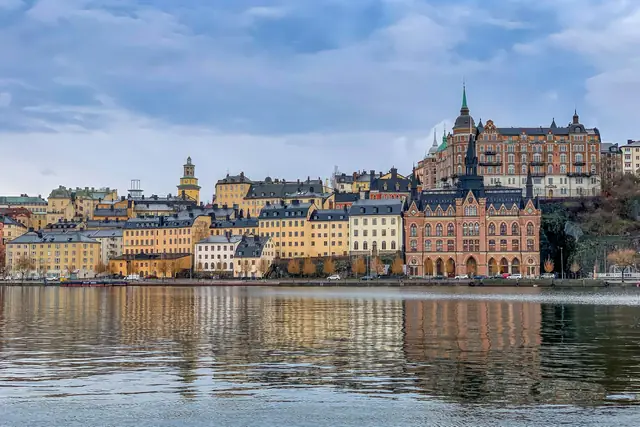
Stockholm
The capital, the most courses, and the highest rents in the country.


Sweden
Research-led universities, with many courses taught in English.
Main intakes
August and January
Work while you study
15
hours a week
Stay after you graduate
12
months
Typical tuition
kr 80,000 to kr 320,000 a year
A partner and children may apply, and adults granted a permit may work.
Swedish institutions and national schemes both offer them, so always ask before you budget.
Up to 12 months, or longer after a doctorate, to look for a job or start a business.
PhD places are usually salaried positions rather than courses you pay for.
Sweden's universities are research-led, and many teach in English. Applications go through one national system, with early deadlines.
Where each level can take you. Lengths are typical, not fixed.
usually 3 years
Three years, and the usual way into a master’s.
usually 1 to 2 years
One to two years, and the point most students aim at here.
usually 4 years
A doctorate is usually a paid position, with no tuition and a longer search permit after.
Study options
Bachelor's to PhD
What you usually need at each level.
Institutions accept IELTS, PTE Academic or TOEFL iBT. The institution sets the score, not us, so check the course page or ask us.
Typical, not a quote.
Tuition — Bachelor's degree
kr 80,000 to kr 320,000 a year
It depends heavily on subject: social sciences at the lower end, architecture and design at the top. Doctoral programmes have no tuition, and scholarships are common.
Tuition — Master's degree
kr 80,000 to kr 320,000 a year
It depends heavily on subject: social sciences at the lower end, architecture and design at the top. Doctoral programmes have no tuition, and scholarships are common.
Living costs
kr 10,656 a month
That covers food, housing, travel, phone and everyday costs.
Money you need to show for your visa
Visa fee
kr 1,500
That is the job-seeking permit. We could not confirm the study permit fee, so ask us.
Swedish Migration Agency: look for work after completing your studies
Health cover
You join the public system once you register, and need insurance until then.
If your permit covers less than a year you need insurance. Longer stays join the population register instead.
Swedish Migration Agency: higher education Swedish Migration Agency: look for work after completing your studies
Tuition is high for non-EU students, but there are scholarships. Living costs are high outside the main cities too.
Ask us for the current figure.
Free student visa advice. We do not promise a visa, an offer or residence.
Many students work part-time. The rule is 15 hours a week while your course runs.
The limit applies to permits granted on or after 11 June 2026. Work in June, July or August, and work that is part of your course, is treated differently.
More hours may be allowed in breaks. Check the rule that applies to you.
A partner and children may be allowed to come with you, if you meet the conditions. Check the official page.
Their finances have to cover their stay. If granted, adult family members and children aged 16 or over may work.
Swedish Migration Agency: look for work after completing your studies
You may be eligible to stay and work for up to 12 months.
You must have completed the whole programme and apply before your study permit expires. Your family can apply at the same time.
Swedish Migration Agency: look for work after completing your studies
Residence permit to look for work after studies
Swedish Migration Agency: look for work after completing your studies
This is not a promise of work or residence. Some graduates later apply for a skilled or employer-sponsored visa.
August is the main start, with a smaller one in January. Deadlines are early, so ask us for current dates.
Fill in one short form. It takes about five minutes, and it's free.
We check what you've studied, your English and your budget. Then we send you options that fit.
We send your course applications. Once you have an offer, we help prepare and send your student visa application.
We stay with you until you hear back. Then we help you get ready to go.
The capital, the most courses, and the highest rents in the country.

A west-coast university city, cheaper than Stockholm and easier for housing.
Where you could study
Our list for Sweden is short for now. Tell us what you're looking for and we'll look into it.
This list is a guide to what we can help you apply to, and it changes. Each institution sets its own entry requirements, fees and courses.
General information only. Visa decisions are made by the relevant immigration authority.
Questions
General information only. Visa decisions are made by the relevant immigration authority.
Free assessment
Three short steps, about five minutes, and it is free. We look at what you have studied, your English and your budget, then send you options that fit.
General information only. Visa decisions are made by the relevant immigration authority.
What we ask
Your name, how to reach you and where you are now.
What you've studied, what you want to do next, and where and when.
Roughly what you can spend and who's paying. A range is fine.
Keep looking
General information only. Visa decisions are made by the relevant immigration authority.